
Level 1 vs. Level 2 EV Charger: Which Is Right for Your Anaheim Home?
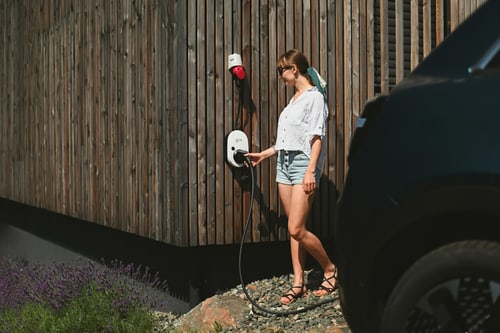
Pull into an Anaheim garage with a new EV and the first real question is not which car to buy next, but how you will keep the one you have charged. Almost every electric vehicle sold in California comes with a basic cord that plugs into a standard wall outlet, so it is easy to assume charging is a solved problem the day the car arrives. It usually is not. The gap between Level 1 charging on a regular 120-volt outlet and Level 2 charging on a dedicated 240-volt circuit is what decides whether your car is ready every single morning or only most of them. This guide compares the two for a typical Anaheim home so you can match the charger to how you actually drive, not to a spec sheet.
The Short Version
- Level 1 charging uses a standard 120-volt outlet and the cord that came with your car, adding roughly 5 miles of range per hour.
- Level 2 charging runs on a dedicated 240-volt circuit and adds around 25 miles of range per hour, about five times faster.
- Level 1 is often enough for short Orange County commutes, plug-in hybrids, or a lightly driven second car.
- Level 2 suits long daily mileage, larger battery packs, two-EV households, or anyone who wants a full charge overnight.
- Only Level 2 needs a permit and a dedicated circuit in Anaheim, and only Level 2 qualifies for the local utility rebate.
- Anaheim Public Utilities, not Southern California Edison, runs the rebate that offsets part of a Level 2 install.
What Level 1 Charging Actually Delivers
Level 1 charging is the slowest and simplest way to power an EV, using the 120-volt cordset that ships with nearly every car plugged into any standard grounded outlet. The U.S. Department of Energy's Alternative Fuels Data Center puts Level 1 at about 1.9 kilowatts, which works out to roughly 5 miles of range for every hour of charging. Left plugged in overnight, that quietly adds around 40 miles by morning with no new wiring at all. For many drivers that is genuinely enough: the DOE notes that plenty of owners meet their daily driving needs by charging overnight with Level 1 equipment. The catch is the outlet. It should be on a dedicated branch circuit near where you park, and an old garage receptacle shared with a freezer or power tools is not a safe long-term charging point.
How Level 2 Charging Compares
Level 2 charging is the setup most Anaheim homeowners end up wanting, because it runs on a dedicated 240-volt circuit like an electric dryer or range. According to the same DOE data, most residential Level 2 units operate at up to 30 amps for 7.2 kilowatts and deliver about 25 miles of range per hour of charging, with higher-amperage units reaching further still. That is roughly five times the pace of Level 1, enough to refill all but the largest packs overnight and to top off a half-empty battery during dinner. Level 2 does not come in the box, though. It needs a wall-mounted charger or a 240-volt outlet, a dedicated circuit run back to your panel, and in Anaheim a permit and inspection. A Level 2 EV charger installation is the piece most buyers add within the first few weeks of ownership.
Charging Speed in Real Anaheim Driving
The speed gap matters most as your daily mileage climbs. A short hop to work near the Platinum Triangle or school runs around the Anaheim Colony might total 20 to 30 miles, which Level 1 replaces overnight without any trouble. A commute up the 91 toward Riverside, a daily drive to Irvine or Long Beach, or weekends that lean hard on the car change the math quickly. Fueleconomy.gov, the joint EPA and DOE resource, notes that a full charge can take anywhere from 3 to 12 hours depending on the equipment and battery, and on Level 1 a deeply drained long-range EV may simply not finish before you need to leave. Level 2 removes that worry by handing you a near-guaranteed full battery each morning, no matter how hard you drove the day before.
Cost and Installation: What Each Level Takes
On upfront cost the two are not close, but neither is the capability. Level 1 is effectively free: you already own the cord, and no electrician is required if a suitable dedicated outlet already exists. Level 2 involves the charger unit plus the electrical work to run a 240-volt circuit, and the price swings with your panel's capacity and the distance from panel to parking spot. Industry sources put typical Level 2 home installs across a wide range depending on wiring and panel work, which is exactly where the local rebate helps. Anaheim Public Utilities' Private EV Charger Rebate offers up to $300 for a standard Level 2 charger, up to $600 for a networked charger paired with a time-of-use rate, and up to $750 toward an electrical panel upgrade needed to support it. Those rebates apply to Level 2, not Level 1, and require a permitted, inspected install.
When Level 1 Is Enough
Level 1 is the right call more often than people expect. If you drive modest daily distances, own a plug-in hybrid with a small battery, or are charging a lightly used second car, overnight Level 1 can keep up indefinitely. It is also a sensible starting point for a renter or anyone not ready to invest in wiring, since it needs nothing beyond a safe dedicated outlet. The honest test is simple: look at the miles you put on the car most days and compare them against the roughly 40 miles Level 1 adds overnight. If you rarely exceed that and your schedule gives the car a full night to charge, paying for Level 2 mostly buys speed you will not use.
When Level 2 Makes Sense for an Anaheim Home
Level 2 earns its cost once your driving, your battery, or your household outgrows what an overnight trickle can refill. Long commuters, drivers of large-battery EVs, and two-EV families all gain from the faster turnaround, as does anyone whose schedule does not reliably leave the car parked all night. Anaheim's hot inland summers add another reason: many EVs can precondition the cabin and battery on shore power before you leave, which is far more practical when the charger replaces that energy quickly. If a second EV is likely later, sizing a dedicated circuit now also opens up options like a NEMA 14-50 outlet installation or load sharing down the road. Older homes in West Anaheim on 100-amp service may need a panel upgrade for EV charging first, a cost the utility rebate helps soften.
An Anaheim-specific note: your local incentives come from Anaheim Public Utilities, not Southern California Edison, so build any Level 2 budget around APU's own charger and panel rebates. The larger networked-charger rebate also asks you to enroll in a time-of-use rate, which rewards charging during off-peak overnight hours.
How to Choose Between Them
There is no universal winner between Level 1 and Level 2; there is only the one that fits your home and your driving. Start with your real daily mileage, add a margin for the days you drive more than usual, and be honest about how many uninterrupted hours the car actually sits plugged in. Light, predictable driving with a full night to charge points to Level 1; higher mileage, a big battery, a tight schedule, or a second EV points to Level 2. Weigh the one-time cost of wiring against years of faster, worry-free mornings, and remember the Anaheim rebate narrows that gap. A quick load check from a local installer like Anaheim EV Charger settles what your home can carry and which level fits it best. For a household that charges at home every night and wants the car always ready, Level 2 is the setup that takes the guesswork out of it.
Common Questions About Level 1 and Level 2 Charging in Anaheim
Can I just use the charger that came with my car?
Yes, that is Level 1 charging, and for many drivers it is enough. The included cordset plugs into a standard 120-volt outlet and adds roughly 5 miles of range per hour, or about 40 miles overnight. The one real condition is that it plug into a dedicated, properly grounded outlet near your parking spot, not a shared garage circuit.
How much faster is Level 2 than Level 1?
About five times faster for a typical home setup. Level 1 adds around 5 miles of range per hour, while a common 7.2-kilowatt Level 2 charger adds around 25 miles per hour. That is the difference between a long-range EV needing most of a day to fill and finishing in a few hours.
Do I need a permit for a Level 2 charger in Anaheim?
Yes. Anaheim requires a building permit and inspection for a Level 2 charging station, and that permit is also what unlocks the Anaheim Public Utilities rebate. Level 1 charging on an existing outlet does not require a new permit, which is part of why it is simpler to start with.
Will Level 2 charging need a panel upgrade?
It depends on your panel's spare capacity, which an electrician confirms with a load calculation. Many newer Anaheim Hills homes on 200-amp service have room, while older 100-amp homes may need an upgrade. If one is required, Anaheim Public Utilities offers a rebate of up to $750 toward the panel work.
Not sure whether Level 1 is enough or Level 2 is worth the wiring? We size and install the right charger for how your Anaheim household actually drives.
Instant QuoteGet the Right Charger for Your Anaheim Driving
Our licensed, EVITP-certified local crew helps you weigh Level 1 against Level 2 and installs the setup that keeps your EV ready every morning.